
Last updated November 17, 2026



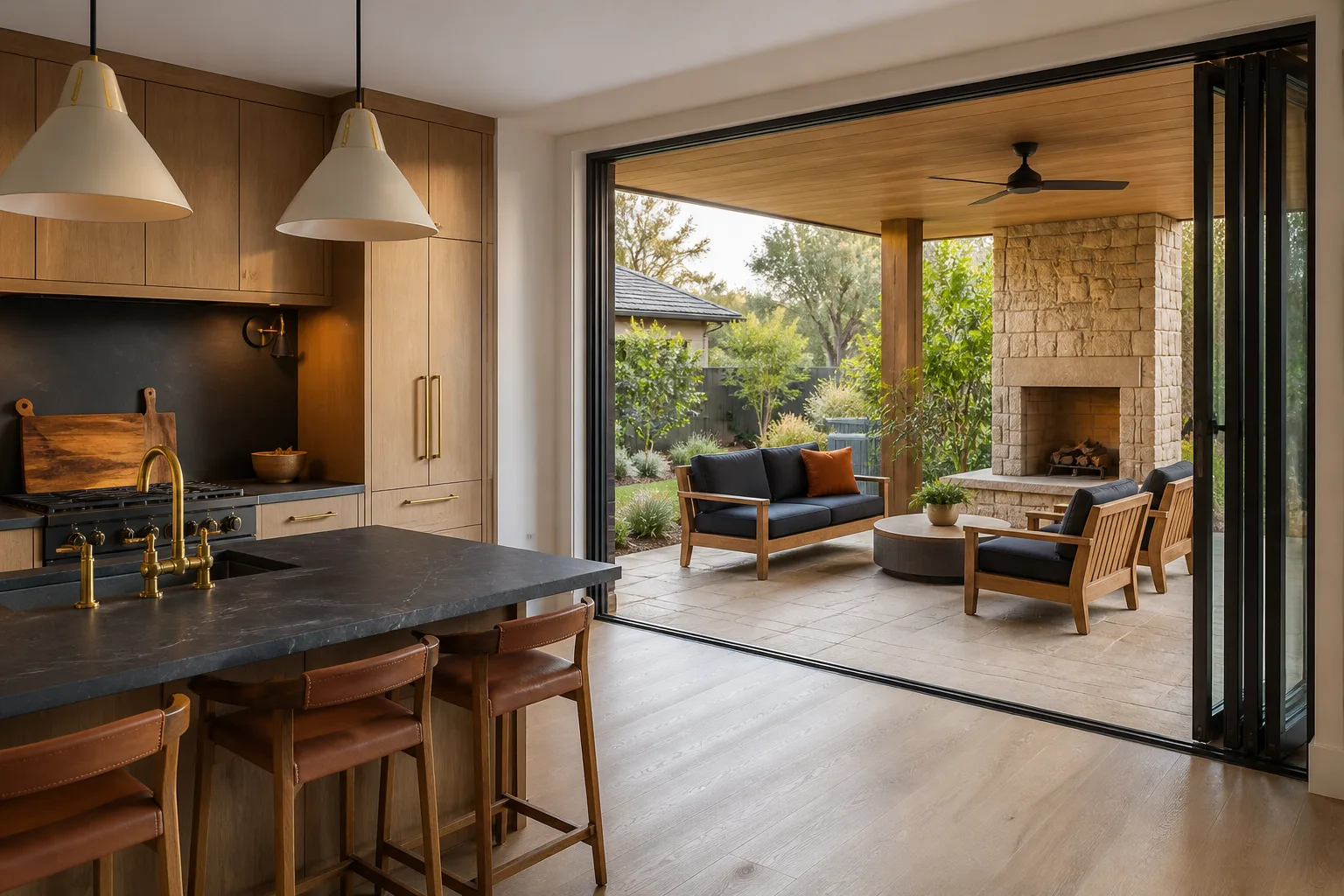




Free written scope consultation - allowances, timeline, and change-order rules on paper before a single trade is scheduled
How to Hire a Construction Contractor in Enterprise: A Step-by-Step Guide
The cheapest bid wins the job roughly 60% of the time. It wins the final invoice almost never. Most homeowners in Enterprise learn this the hard way because they compare bids by the number at the bottom of the page instead of reading what’s actually written on it. A low number means nothing when the scope is half-finished, the allowances are placeholders, and the exclusions list runs longer than the inclusions. This guide teaches you to read a bid the way a project manager does: line by line, looking for the gaps that turn a bargain into an overrun. If you’re hiring a contractor in Enterprise, NV for a roof, a kitchen, an addition, or a full-property upgrade, this is how to do it without getting burned.
Quick Answer
To hire a construction contractor in Enterprise, verify the contractor’s Nevada license and classification on the NSCB database, confirm they pull permits in unincorporated Clark County (not just Las Vegas or Henderson), check whether they self-perform or subcontract, and demand a written bid with fixed line items, no open-ended allowances, milestone payment terms, and lien waivers. The lowest bid is rarely the lowest final cost; the written scope is what protects you.
Styles & brands we work with
- Kitchen remodeling
- Bathroom remodeling
- Home additions & ADU
- Roofing
- Windows & doors
- Driveway & pavers
- Fence
Table of Contents
- Step 1: How do you verify a Nevada contractor’s license?
- Step 2: What do Nevada license classifications mean for your project?
- Step 3: Why does Clark County permitting matter in Enterprise?
- Step 4: How do you read a bid like a project manager?
- Step 5: Which bid line items signal cut corners?
- Step 6: Does the contractor self-perform or subcontract everything?
- Step 7: Which contract clauses actually protect you?
- Step 8: How do local climate and housing change material choices?
Step 1: How do you verify a Nevada contractor’s license?
You verify a Nevada contractor’s license on the Nevada State Contractors Board (NSCB) database by searching the business name or license number and confirming three things: the license is active, the classification matches your project, and the qualifying individual is listed. It takes about five minutes. Skipping it is the single most expensive shortcut a homeowner in Enterprise can take.
Here’s what to check, in order:
- Status. Active, expired, suspended, or “inactive.” An expired license means the contractor can’t legally pull permits or sign a contract in Nevada.
- Classification. The letters (A, B, C-1, C-3, and so on) tell you what kind of work the licensee is authorized to perform. A C-3 covers carpentry; a C-21 covers plumbing; an A or B covers general building and can run a whole project. This is where most Enterprise homeowners get confused.
- Qualifying individual. The named person who passed the exam and carries the license. If they’ve left the company, the license should have been updated.
- Complaints and disciplinary history. The NSCB lists formal actions. Read them. A single resolved dispute is normal in a high-volume trade; a pattern is not.
We note all of this plainly because we’ve watched homeowners ask the right question in the wrong order. They ask about price before they ask about the license. In our view, a bid from an unverified contractor isn’t a bid at all; it’s a proposal from a company you can’t hold accountable. Enterprise Construction Co is licensed and insured, and we encourage you to verify any contractor you’re considering, including us, before you sign anything.
Step 2: What do Nevada license classifications mean for your project?
Nevada classifies contractor licenses by the type of work performed, and the classification on the license must match the work in your contract. A contractor licensed only for a specialty trade cannot legally take on a full-property remodel that rolls that trade together with others. This matters especially on multi-phase projects, which are common in Enterprise.
The classifications you’ll encounter most on residential work:
- A (General Engineering) and B (General Building): The broad licenses. A “B” can take on construction of a structure, including the coordination of multiple trades. If you’re building an addition, an ADU, or a whole-house renovation, you want to see a B or A.
- C-series specialty licenses: Each trade has its own classification. Roofing, plumbing, electrical, cabinetry, and fencing all sit under their own C-numbers. A roofer with a C-39 can do roofing; they cannot legally frame or wire a kitchen.
- Subclassification and limits. Some licenses carry monetary limits on the value of any single contract. Ask whether the limit exceeds your project budget.
Here’s the practical part. If you’re updating a single room, a specialist with the right C-classification can be a good choice. If you’re doing several improvements at once (roof now, kitchen later, new fence, a new driveway), a B-licensed general contractor who can coordinate the trades is the cleaner path. Enterprise Construction Co handles seven service categories under one relationship: roofing, windows and doors, kitchen, bath, home additions & ADU, fence installation, and driveway & pavers. That scope is a license question before it’s a design question.
Step 3: Why does Clark County permitting matter in Enterprise?
Enterprise sits in unincorporated Clark County, so building permits for most residential work are issued by Clark County, not by the City of Las Vegas or the City of Henderson. That distinction trips up homeowners who assume a contractor working “in Vegas” is automatically approved to work in Enterprise. You need to confirm it explicitly.
Why it matters: a contractor who only pulls city permits may hand the homeowner the responsibility of pulling county permits, or worse, may skip them. Permits exist for structure, electrical, plumbing, gas, and any addition that changes square footage. A new roof generally requires a permit in Clark County when the work includes any sheathing or structural repair; a kitchen remodel that moves a gas line certainly does.
Ask the contractor these questions before signing:
- “Will you pull the permit, or will I?” If the answer is “you,” walk away from the bid.
- “Which jurisdiction will you file with for my address?” You’re looking for “Clark County,” not “City of Las Vegas.”
- “Who handles the inspections?” A good contractor schedules them and is present.
- “What happens if the inspector fails a piece?” The contractor fixes it. Not you.
Permits protect the remodel itself. If you ever sell the house, an unpermitted addition or a kitchen without a final inspection can become a line item in negotiation or an outright obstacle. Enterprise Construction Co pulls permits and schedules inspections on every project we manage, and we won’t hand the paperwork back to the homeowner. It’s part of the scope.
Step 4: How do you read a bid like a project manager?
A bid is a scope document, not a price tag. The good ones read like a construction plan in miniature: quantities, brands, models, and inclusions. The bad ones read like an invoice outline: a name, an address, and one lump sum. You want the first kind even if you have to ask for it.
Break every bid into four sections and check them independently:
- Scope of work. What exactly is being built, replaced, or installed? For a roof, that means square footage, underlayment brand, and whether the old material is torn off. For a kitchen, it means cabinet boxes, dovetail joints (or not), countertop material and edge, appliance allowance, tile, and trim. Vague scope = vague result.
- Materials. Named manufacturers and models. “Architectural shingles” is not a material spec. An Owens Corning or IKO product by SKU is. In our experience, the brands matter because they come with warranty paths and installation standards.
- Exclusions. The list of what the bid does NOT cover. Read this twice. Every surprise on the final invoice was here.
- Payment schedule. When you pay, and what you pay for. A bid that asks for 50% up front on a small project is playing red flag number one; you want milestone-based payments tied to completed work.
If the bid doesn’t include the material brand and the permit handling, ask for a revised version. A contractor who pushes back on that request is telling you something.
Step 5: Which bid line items signal cut corners?
Certain line items in a bid signal that the contractor hasn’t scoped the work, is planning to substitute cheap materials, or has left room to bill you later. Scan every bid for these phrases before you compare prices.
- “Allowance.” An allowance is a budget placeholder, not a promise. “Tile allowance: $4 per square foot” means your tile is capped there and anything you actually want is billed extra. In a kitchen, allowances on cabinets, countertops, and appliances are where the final invoice grows the fastest.
- “As needed.” In a demo or repair line, “as needed” is a blank check. What does “repair sheathing as needed” cost if half the roof deck is soft? Get a per-sheet or per-square-foot number before signing.
- Open-ended demo language. “Remove existing drywall as required” can mean a small area or half a room, billed hourly. A real bid prices demo by square foot or by room.
- “Subfloor/structural work billed separately.” In a bathroom or addition, structural work is not optional. If it’s not in the bid, it’s a change order waiting to happen.
- Missing permit line. If permit fees aren’t in the bid, you’ll be billed for them later or tasked with pulling them yourself.
- “Match existing.” On a partial remodel, “match existing” sounds protective but is a moving promise. Ask the contractor to name a specific product.
None of these phrases is automatically disqualifying. Allowances in a kitchen are normal with a design still open. What kills a budget is an allowance that doesn’t say what it covers or how overages are priced. Get those numbers in writing, and get the change order process defined before you sign.
Step 6: Does the contractor self-perform or subcontract everything?
Ask the question directly: “Which trades do your own employees handle, and which do you subcontract?” The answer tells you where accountability lives. A contractor who frames with their own crew and subs the electrical and plumbing work is normal. A contractor who subs every trade, including demo and cleanup, is a broker with a logo. That works for some homeowners, but you need to know which one you’re hiring.
Why it matters in Enterprise:
- Schedule control. When the same team moves from demo to framing to drywall, the handoff doesn’t fall through gaps. When three separate subs depend on each other, weather and availability can push the schedule weeks out.
- Quality consistency. A crew that has installed the same brand of shingle, cabinet, or tile for years installs it to spec. A rotating cast of subs installs it their own way, which matters when the manufacturer’s warranty is on the line.
- Warranty conversation. One team, one warranty. On a multi-trade project that has a roofing element and a kitchen element, you don’t want two phone numbers and a finger-pointing match in year three.
Enterprise Construction Co was built around this question. We manage seven service lines under one relationship, so the handoff between the roof, the windows, the kitchen, and the hardscape is our job, not yours. That’s the practical value of a full-property contractor versus a chain of specialists. It’s not for every project, but for a multi-phase upgrade it changes the oversight burden on the homeowner.
Step 7: Which contract clauses actually protect you?
The contract is where a bid becomes binding. Three clauses do the heaviest lifting for a homeowner: payment schedule, lien waivers, and change order approval. Get all three right and most construction disputes never happen.
Payment schedule tied to milestones
Payments should follow completed work, not calendar dates. A standard structure looks like this:
- Modest deposit at signing (enough to order materials, not enough to fund the whole project).
- Progress payment at a defined milestone, such as completion of framing or rough-in inspection passed.
- Second progress payment at pre-finish walkthrough.
- Final payment on punch-list completion and final inspection sign-off.
The key line to look for: “Final payment due upon final inspection and homeowner sign-off.” If the contract says “final payment due on substantial completion,” ask them to define “substantial.”
Lien waivers
Even if you pay the general contractor in full, a subcontractor or material supplier who wasn’t paid can file a mechanic’s lien against your property. The protection is a conditional lien waiver for each progress payment and an unconditional waiver at final. Get the waiver with the check, every time. It’s a standard document in Nevada and any legitimate contractor has them at hand.
Change order approval
Every change to the scope, whether it’s a different tile, a moved outlet, or a discovered framing repair, should require a signed change order that states the added cost and the schedule impact before work continues. In writing. If the contract doesn’t spell that out, add it. A handshake on a mid-project upgrade is how “we agreed on that” becomes a dispute.
We put all three of these in every contract at Enterprise Construction Co, and we recommend you demand them whether you hire us or someone else. It’s the cheapest insurance in construction.
Step 8: How do local climate and housing change material choices?
Enterprise sits in the Mojave Desert, and the local climate affects which materials hold up and which ones fail early. Hail isn’t a meaningful local risk, but intense summer UV, seasonal dust, and daytime-high heat cycles in the 100s do the real work on a house exterior. Bid choices should reflect that.
Where the climate drives the decisions:
- Roofing. UV degradation and thermal cycling wear out asphalt shingles faster in the desert than in milder zones. We look for shingles with a strong reflective or granule performance in that environment, from manufacturers like Owens Corning, IKO, or Atlas. Underlayment matters as much as the shingle in this climate; a cheap felt is a future leak.
- Windows and doors. Solar heat gain through west- and south-facing glass is a real comfort and cooling cost. Impact-rated windows from PGT or CGI (which include storm-resilient construction) also help with the seasonal dust and monsoon wind events typical in Southern Nevada.
- Hardscape. Pavers and driveways in Enterprise face intense summer surface heat and monsoon rain runoff. Belgard and Techo-Bloc paver systems are specified for that exposure; concrete without control joints is a crack-shortcut in this climate.
- Exterior siding and trim. James Hardie fiber cement siding holds up to the sun where wood trim splits and paint fails. It’s not in every bid unless you ask for it.
Material selection is the biggest point of information asymmetry in a bid. If you can read the brand, you can read the plan. A bid without brand names isn’t specifying a product; it’s specifying a hope.
Common Mistakes to Avoid
- Choosing by lowest bid. A low bid usually wins on scope cuts, allowances, or exclusions, not efficiency. Compare line items, not bottom lines.
- Skipping the NSCB verification. It takes five minutes and confirms status, classification, and complaint history. Any contractor who resists that check is telling you something.
- Letting the contractor leave permit duty to you. In unincorporated Clark County, the permit has to come from the county, not the city. Confirm the contractor files with Clark County, not just Las Vegas.
- Paying 50% up front. Large deposits shift all risk to the homeowner. Milestone-based progress payments are the norm on well-run projects.
- Accepting “allowances” without a definition. Every allowance should specify what it covers and how overages are priced. If it doesn’t, it’s a change order you haven’t seen yet.
- Approving verbal change orders. Email threads and handshakes don’t survive a dispute. Signed change orders do.
- Not asking which trades are self-performed. A contractor who subs everything is a broker. That’s fine for some jobs and wrong for others; you just need to know which you’re hiring.
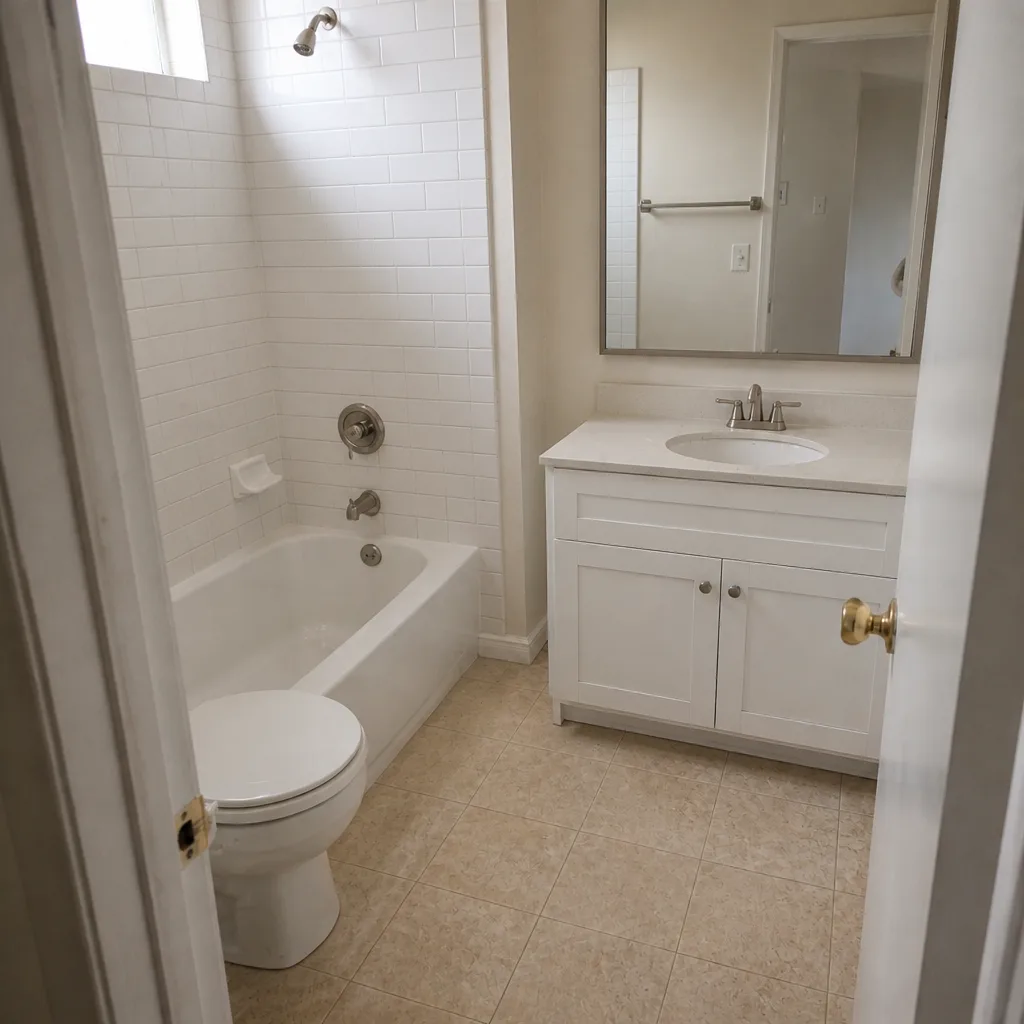
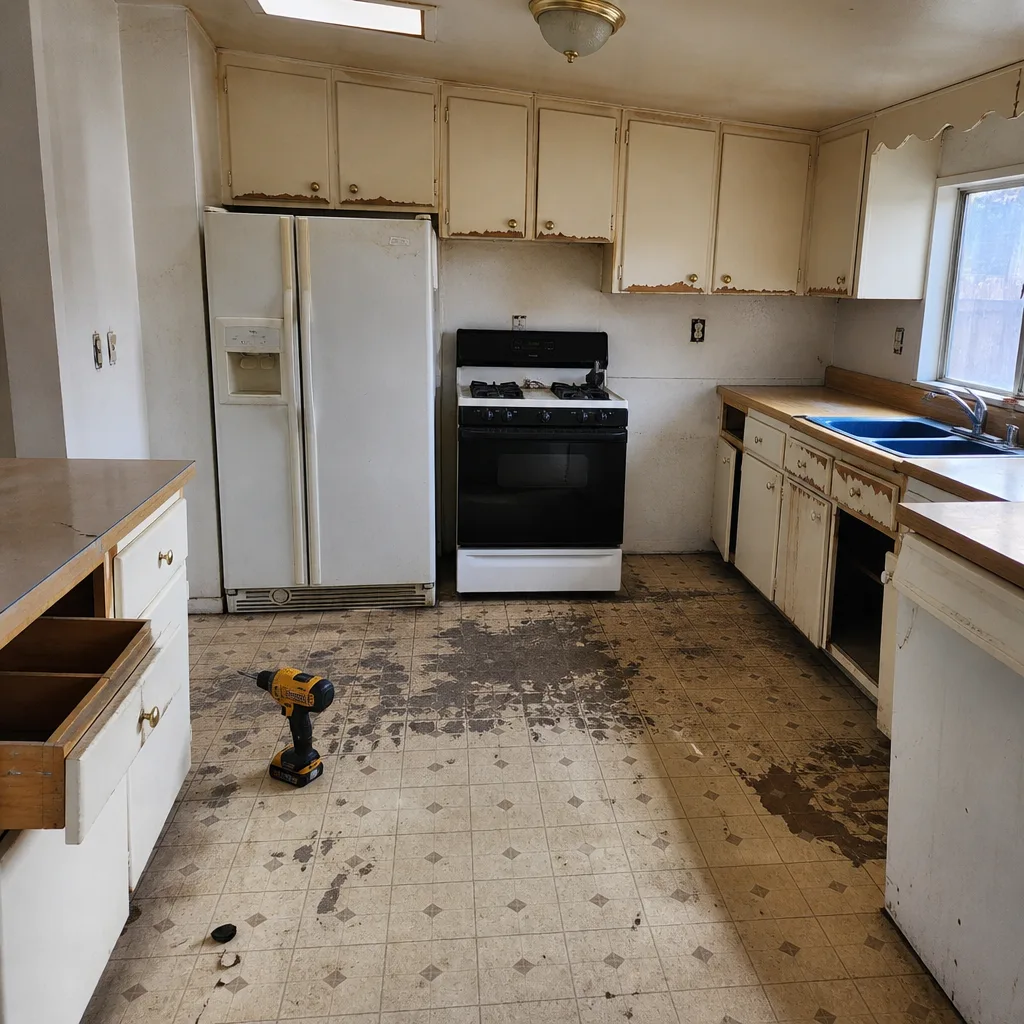
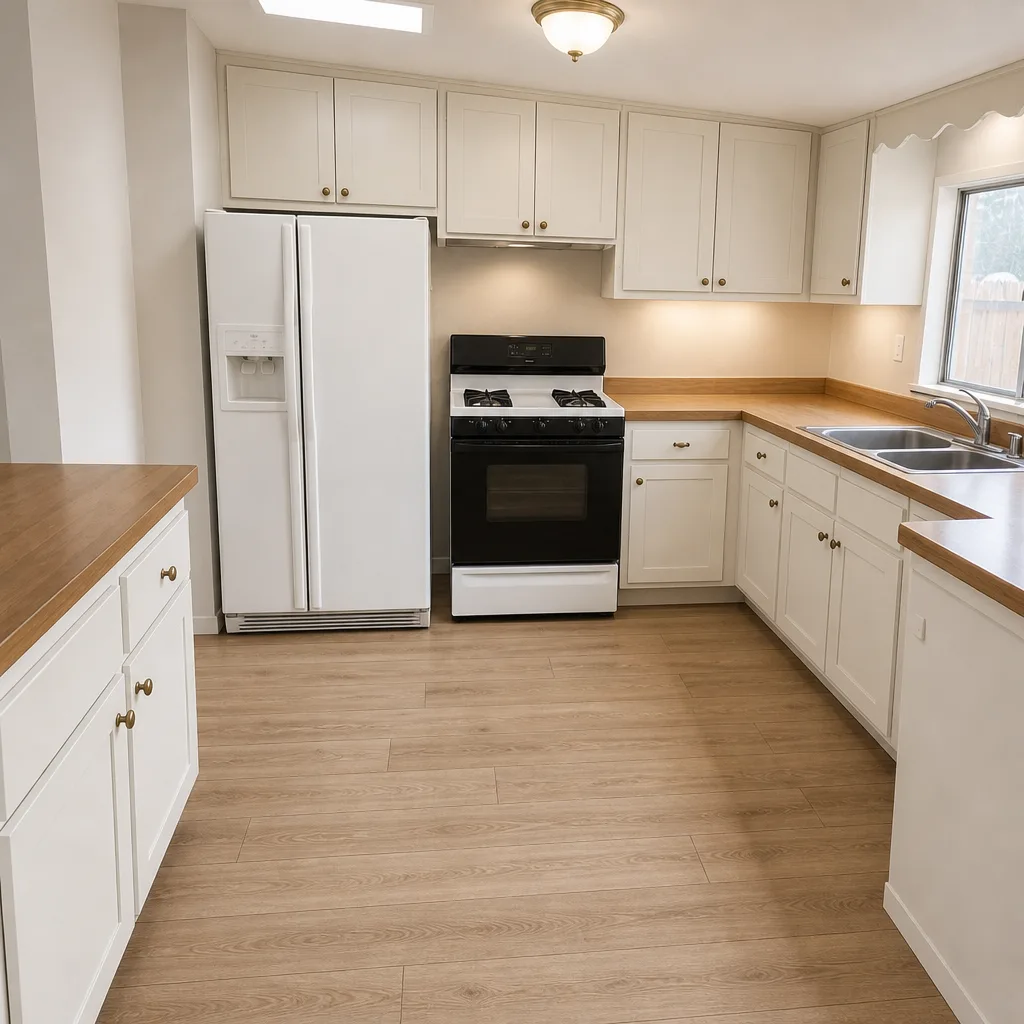
See the difference
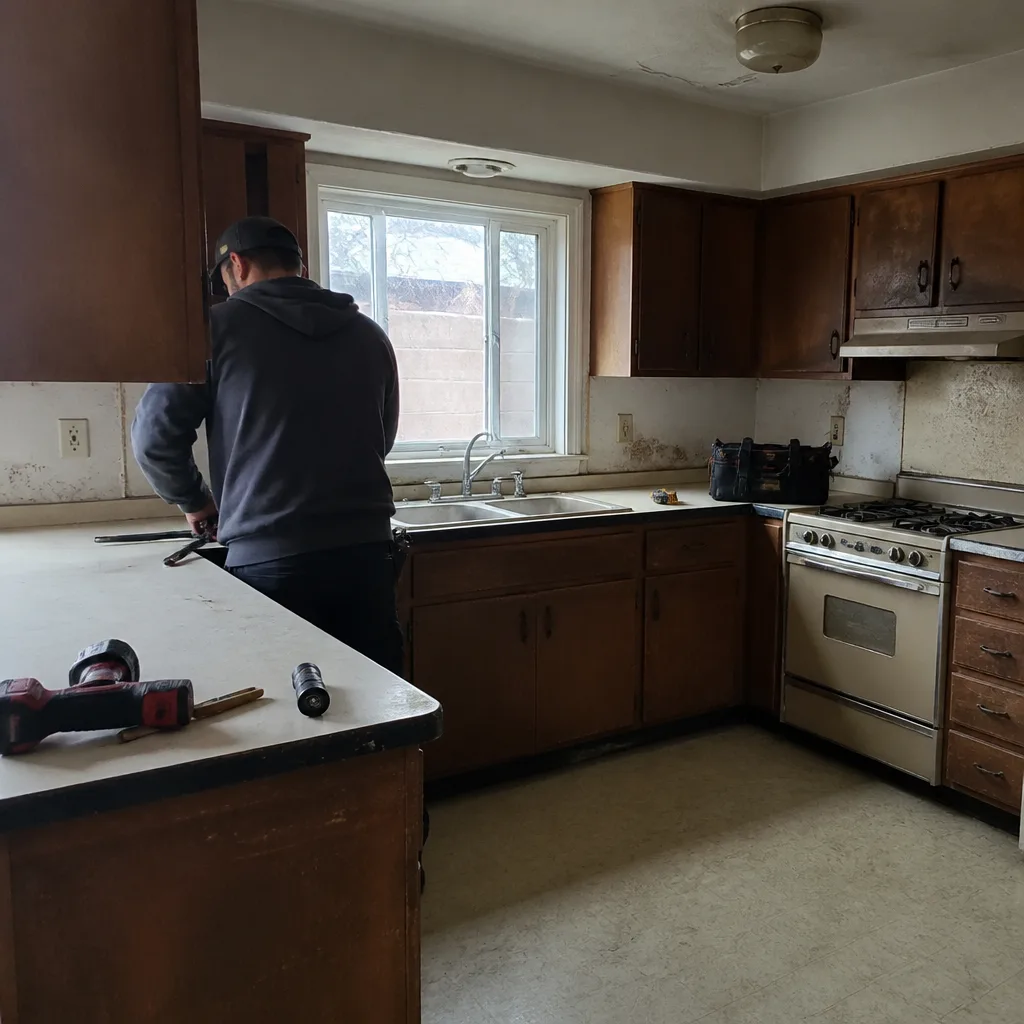 Before
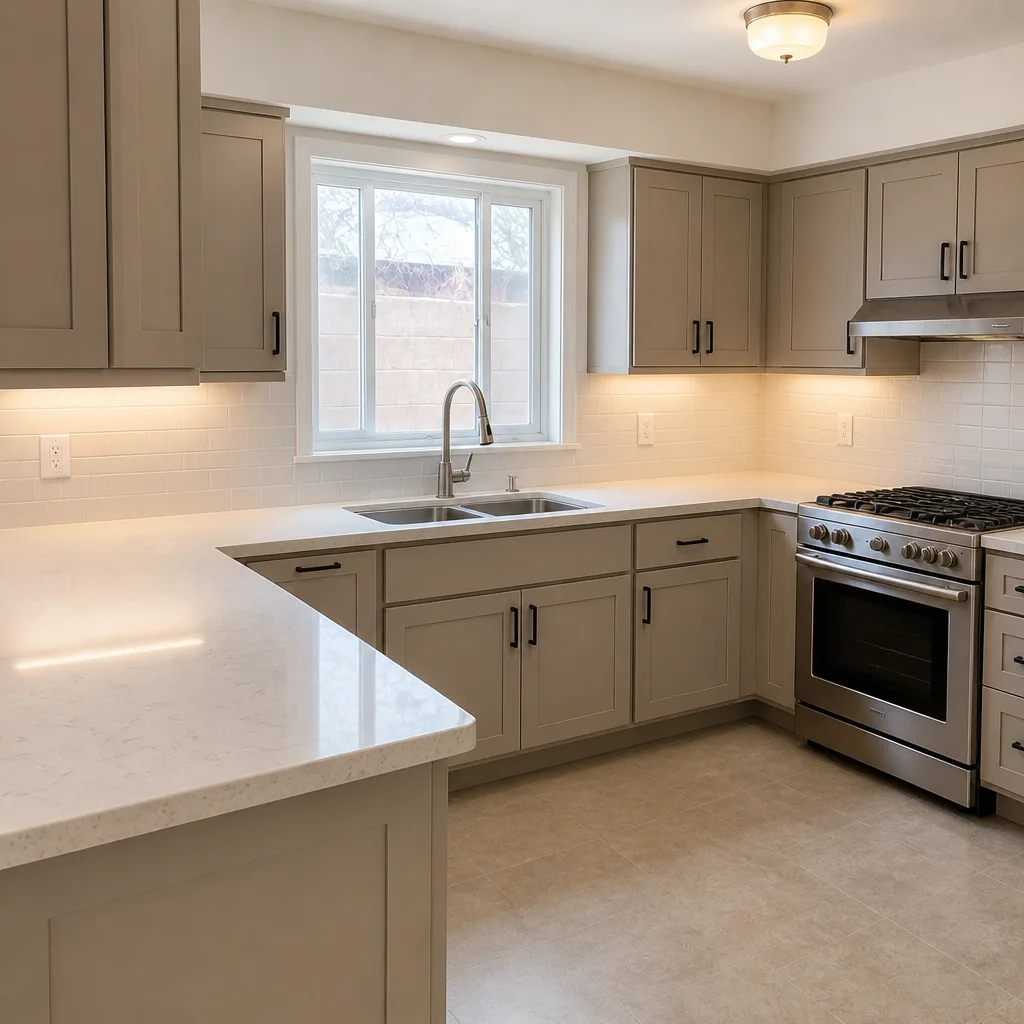 After
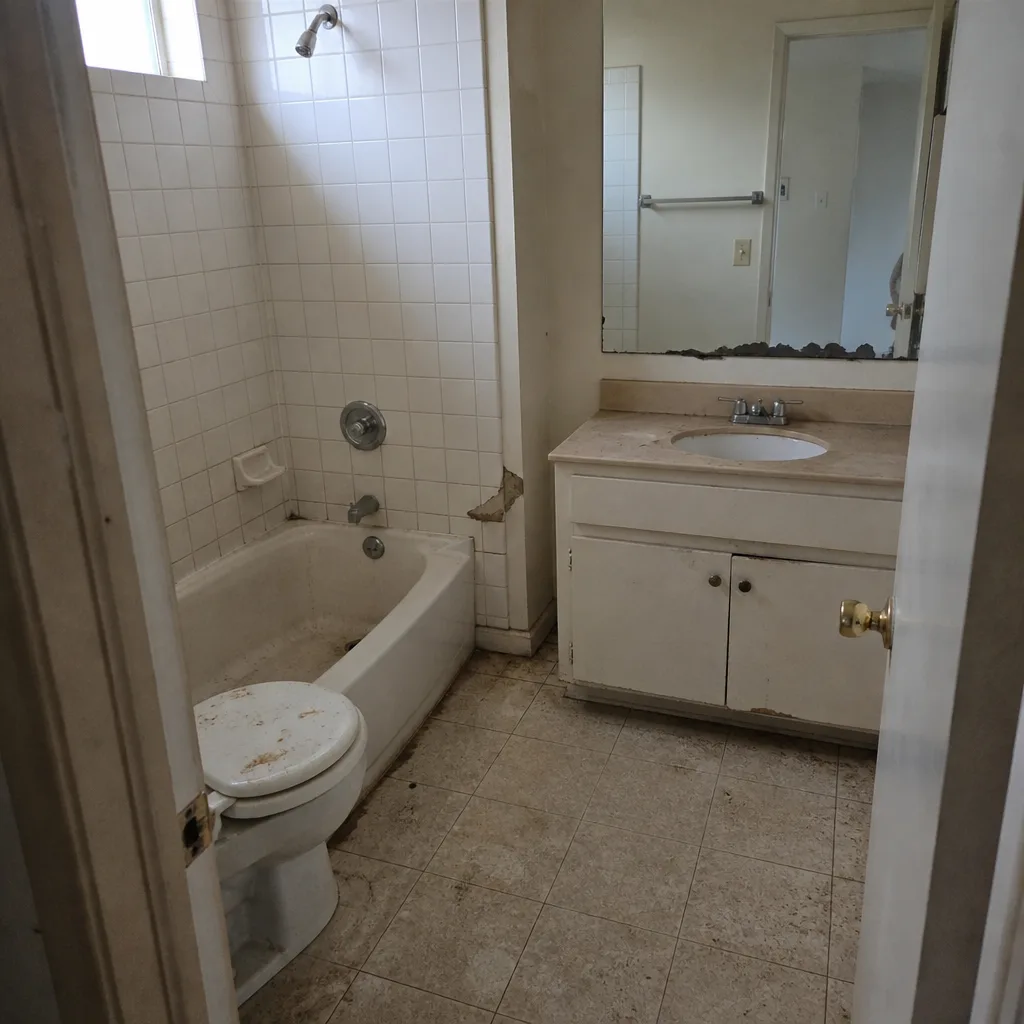 Before
 After
 Before
 After
When to Call a Professional
Some jobs are genuinely a call-a-pro decision, and in Enterprise the line is very clear on the following: anything that touches structure, gas, electrical, or the building envelope. Replacing a load-bearing wall in a kitchen remodel, moving a gas line, adding square footage for an ADU, or tearing off a roof plane requires licensed trades and Clark County permits. A soft spot in a subfloor is rarely just a soft spot; it’s usually a moisture path you haven’t found. And if your project is multi-trade (a roof plus windows, a kitchen plus an addition, a driveway plus fencing), coordination is the part homeowners underestimate. Enterprise Construction Co offers free estimates in Enterprise. Call (844) 761-9449 to schedule yours. Written line-item proposals, permit handling, and a single point of contact on multi-phase work.
Frequently Asked Questions
There’s no single contractor fee in Enterprise; the price you pay is the project cost, which varies by scope, materials, and site conditions. A contractor quote is measured in the actual work, not an hourly rate. For specific line items, ask for a written estimate with brands and quantities spelled out. Call (844) 761-9449 for a free, written line-item proposal on your project; estimates are free.
No. A licensed contractor pulls the permit on your behalf. On a residential project, the contractor of record should file with Clark County (since Enterprise is unincorporated) and manage the inspections. If a contractor insists you pull the permit, that’s a red flag, and a sign they’re not licensed for the work or not willing to be accountable. Call us at (844) 761-9449 and we’ll walk you through what your specific project requires.
Not on a well-scoped bid. The written estimate sets the final price. Changes happen only if the scope changes: an upgrade you approve, a hidden condition the inspector identifies, or an allowance overage you signed off on. Every change should come to you as a signed change order before the work proceeds. We build that into every contract, and you should demand it from any contractor you hire.
Timelines vary widely by scope and permit review. A roof replacement is typically a short job, a full kitchen remodel runs several weeks, and a home addition or ADU spans months from permit to final inspection. Clark County review times can stretch the calendar on anything requiring structural permits. Ask the contractor for a written schedule with milestones, not a verbal guess. Call (844) 761-9449 for a timeline tied to your actual scope.
Yes, and a single licensed general contractor is often the cleaner option for a multi-phase job. Coordinating separate specialists means managing trade handoffs, multiple contracts, and warranty conversations across multiple companies. Enterprise Construction Co manages seven service lines under one project manager and one warranty conversation. Call (844) 761-9449 to scope a full-property upgrade.
Named brands tied to specific product lines, not generic category language. On roofing, look for manufacturers like Owens Corning, IKO, Atlas, or CertainTeed. On windows and doors, Therma-Tru, PGT, or CGI. On kitchens, KraftMaid, Wellborn, Cambria, or Caesarstone. On plumbing fixtures, Kohler, Grohe, Toto, or Moen. On hardscape, Belgard, Unilock, or Techo-Bloc. If the bid doesn’t name a brand, it isn’t specifying a product. Call (844) 761-9449 and we’ll send a materials list with your estimate.
The Bottom Line
The lowest bid almost never wins the final invoice. What protects you is the same thing every project manager looks for: a verified license with the right classification, confirmed Clark County permitting, a written scope with named brands and quantities, milestone payments, lien waivers, and change orders in writing. Enterprise is a market where the summer heat and dust stress every exterior material, so brand and spec choices matter more than most homeowners realize. Enterprise Construction Co handles the full property, from the roof to the driveway, under one relationship with one project manager. Call (844) 761-9449 for a free written estimate and we’ll walk through your project scope with you line by line. Why us? Enterprise Construction Co absorbs the coordination so you don’t have to.
Our technicians have up to 10 years of experience, and every project is managed with a written estimate, permits pulled, and inspections passed. We answer 24/7. Fast dispatch, 7am-7pm, Sunday through Friday.
Written by the team at Enterprise Construction Co.