Last updated November 17, 2026






Free written scope consultation - allowances, timeline, and change-order rules on paper before a single trade is scheduled
Driveway & Pavers Maintenance Checklist for Enterprise Homeowners
A paver driveway in Enterprise sees roughly 300 days of direct sun a year, and that’s not a cosmetic problem. It’s a structural one. UV exposure breaks down the polymeric joint sand that locks every paver against its neighbor, and once that sand fails, the whole system starts to move. Most maintenance guides you’ll find online were written for wet, cool climates where freeze-thaw is the enemy. Here, the enemy is heat, alkaline soil, and a monsoon season that arrives with force every July. This checklist walks through the failure modes that actually happen in Enterprise, Nevada, how to catch them early, and which steps almost nobody does but should.
Quick Answer
Paver driveways in Enterprise need re-sanding with polymeric joint sand every 2 to 3 years rather than the 4 to 5 years manufacturer specs assume, because desert UV degrades the binder faster. Check edge restraints and drainage channels every spring before monsoon season, and plan on re-compacting settled sections every few years to keep the base from migrating. A penetrating sealer reapplied on a 3 to 5 year cycle slows UV bleaching and efflorescence without trapping moisture.
Styles & brands we work with
- Kitchen remodeling
- Bathroom remodeling
- Home additions & ADU
- Roofing
- Windows & doors
- Driveway & pavers
- Fence
Table of Contents
- Why UV Degrades Joint Sand Faster in Enterprise
- The Re-Sanding Schedule That Actually Works Here
- Efflorescence vs. Oil Stains vs. UV Bleaching
- Monsoon Prep: Restraints and Drainage Before July
- Choosing a Sealer for Enterprise Conditions
- Re-Compacting Settled Sections: The Step Nobody Does
- A Seasonal Maintenance Calendar
- Common Mistakes to Avoid
- When to Call a Professional
Why UV Degrades Joint Sand Faster in Enterprise
Polymeric joint sand works by binding sand grains together with a polymer that cures into a flexible, water-resistant matrix. In most of the country, that matrix holds for four or five years before it needs refreshing. In Enterprise, the UV index regularly climbs to 10 or higher through the summer, and that intensity attacks the polymer binder directly. The surface of the joint sand dries, cracks, and starts to erode from the top down. Wind then lifts the loosened sand out of the joints, and once a joint is empty, the pavers on either side lose their lateral support.
What makes this worse is the diurnal swing. Summer days in Enterprise can push past 105°F and drop into the low 80s overnight. That thermal cycling works the pavers against each other slightly, and every one of those micro-movements puts stress on the joint sand. Add the abrasive grit that desert wind carries and the joints wear from two directions at once.
In our experience, the visible signs show up in a predictable order:
- Joint sand starts looking pale and dry rather than uniformly dark
- Small voids appear along the highest-traffic path, usually where tires track
- Weeds find the widened joints within a season
- Individual pavers begin to rock slightly underfoot
If you catch the first sign, a re-sand solves the problem. If you wait until pavers rock, you’re looking at pulling and re-setting units, which is a different job entirely. Call (844) 761-9449 for a free estimate if you’re not sure which stage your driveway is in. We answer 24/7. Fast dispatch from 7am to 7pm, Sunday through Friday.
The Re-Sanding Schedule That Actually Works Here
Manufacturer instructions on a bag of polymeric sand usually say something like “reapply every 4 to 5 years.” For an Enterprise driveway, plan on 2 to 3 years instead, and check the joints annually so you can spot early failure. That’s the single biggest adjustment homeowners in this climate need to make to standard maintenance advice.
How a re-sand actually goes, so you know what you’re paying for:
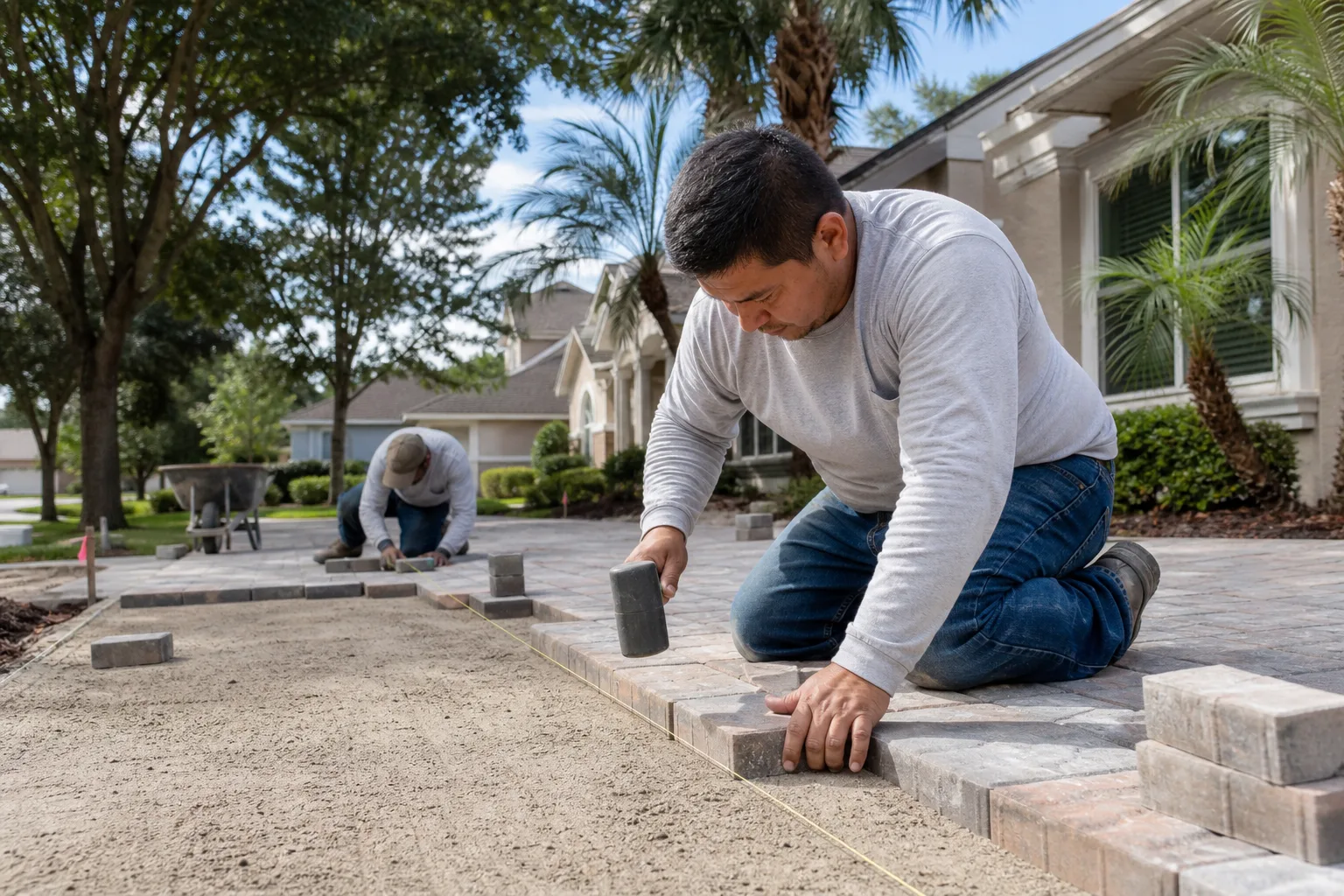
- Clean the joints. Any old sand, dirt, or organic debris gets removed to a consistent depth. This is the step that gets rushed, and it’s the step that determines whether the new sand bonds.
- Dry-check the surface. Polymeric sand will not cure properly if the pavers are wet going in. In the middle of summer, that means working early and keeping the surface bone dry until the joint fill is complete.
- Fill and compact. Sand goes in, gets vibrated into the joints, and the surface gets swept clean before any water touches it.
- Activate. A controlled mist sets the polymer. Too much water too fast washes the binder out of the joint, and in desert heat the margin for error is smaller than in cooler climates because the surface dries so quickly.
- Cure. Keep traffic off for the period the product specifies, and keep an eye out for rain. In Enterprise, that’s rarely a problem between May and June, but monsoon season changes the calculation.
If you’re having a new paver driveway installed, this is the schedule you should plan on from day one rather than treating re-sanding as an emergency. When we handle driveway & pavers work, we walk homeowners through what the material needs so there are no surprises two summers in.
Efflorescence vs. Oil Stains vs. UV Bleaching
Three different problems look similar on an Enterprise paver driveway, and treating one as the other usually makes it worse. Getting the diagnosis right is half the job.
Efflorescence
Efflorescence is a white, powdery bloom that appears on the surface of the pavers. It happens when soluble salts migrate to the surface as moisture moves through the concrete and evaporate, leaving the salt behind. Enterprise soils and water tend to run alkaline, which makes this more common here than in regions with softer water. Efflorescence is usually superficial. It brushes off, and a proper efflorescence cleaner dissolves the residue. The mistake homeowners make is sealing over it, which traps the salt and forces it to push the sealer off from below.
Oil Stains
Oil and transmission fluid leave a dark, defined splotch with a soft edge. They penetrate the concrete surface and need a poultice or a dedicated degreaser to lift, and repeated applications usually get most of it. Oil staining on a driveway is almost always local to where a vehicle parks, which is a useful clue.
UV Bleaching
UV bleaching shows as a general lightening of the color, often most noticeable where the sun hits all day and less obvious in shaded areas. It’s not a stain at all. The pigment in the surface of the paver has been degraded by solar exposure. No cleaner will fix it because there’s nothing on the surface to remove. The only real remedies are a pigmented sealer designed to restore color, or accepting the fade as part of the material’s patina.
Here’s the quick test. Does it brush off and feel powdery? Efflorescence. Is it dark and contained to a spot? Oil. Is the whole surface lighter than it was and darker where shade falls? UV. If you can’t tell, a free estimate from Enterprise Construction Co sorts it out before you spend money on the wrong fix. Call (844) 761-9449.
Monsoon Prep: Restraints and Drainage Before July
Monsoon season in Enterprise means short, intense bursts of rain that arrive fast and overwhelm any surface that isn’t draining correctly. The prep work needs to happen in spring, before the first storm, not after the first washout. Two items top the list: edge restraints and drainage.
Edge Restraints
Every paver system has an edge restraint – a concealed plastic or metal lip that holds the outermost course of pavers against the base. If a restraint loosens or cracks, the pavers along that edge start to spread outward. In a monsoon downpour, water gets into the widened gaps and erodes the bedding sand underneath. Walk the perimeter of your driveway in spring and look for:
- Pavers that have shifted beyond the restraint line
- A visible gap between the edge paver and the restraint
- Loose soil where the edge used to sit flush against the base
- Cracks in the plastic restraint itself, which gets brittle after years of UV
Drainage Channels
If your driveway has a channel drain, trench drain, or a slope to a swale, clear it out before July. Desert landscaping sheds leaves, gravel, and fine dust during wind events, and a drain that looks fine from above can be nearly blocked below. A blocked drain during a monsoon burst means water pools on the pavers, which loads the base and accelerates settling. Clear the grates, flush the channel, and check that water exits where it’s supposed to. If the driveway has no drainage at all and slopes toward the garage, that’s worth a conversation with a contractor before the next storm season.
Most of the drainage issues we see on Enterprise driveways come down to a slope that was never quite right to begin with. If you’re adding a driveway or replacing an old one, the slope and drainage plan matter as much as the paver selection, and this is a service we handle under our driveway & pavers umbrella.
Choosing a Sealer for Enterprise Conditions
Two main types of sealer exist, and they do different things. Getting the choice right matters more in Enterprise than it does in cooler climates, because the sun here will punish a wrong sealer choice within the first summer.
Penetrating Sealers
A penetrating sealer soaks into the concrete surface and lines the pores from inside. It doesn’t change the appearance much, doesn’t form a coating that can peel, and slows moisture uptake and UV damage. Application is typically recommended every 3 to 5 years. This is the safer choice for most Enterprise homeowners who like the natural look of the pavers and want protection without a film that can blister in the heat.
Film-Forming Sealers
A film-forming sealer sits on top of the pavers as a coating. It can enhance color, provide a wet look, and give more visible stain resistance. The risk in Enterprise is heat. A film-forming coating is a solid surface, and it expands and contracts with the pavers through those daily temperature swings. Cheap film-forming products can fail, cloud, or peel within one or two summers. Quality acrylic and polyurethane formulas hold up much better. If you’re going to use one, use a product rated for exterior high-UV environments and follow the cure timing exactly. Applying in the middle of a 105°F day is asking for trouble.
The Brand Question
Manufacturers differ in how they formulate the UV inhibitors and the binder strength, and the difference shows up in year two, not day one. Any sealer you pick should carry a rating for exterior use and an explicit UV package. Ask for the technical data sheet before you commit to a product, and know what the recoat schedule actually is – not what the marketing page says.
One rule common to both types: never seal a driveway that still has active efflorescence or trapped moisture. Fix the drainage and let the pavers dry fully first, or the sealer will fail and you’ll be stripping it off.
Re-Compacting Settled Sections: The Step Nobody Does
This is the maintenance task that extends the life of a paver driveway by years, and almost nobody does it. Pavers sit on a bed of sand over a compacted base. Over time, traffic, water, and thermal movement cause small areas to settle, usually at the highest-traffic points – the apron where the driveway meets the street, and the approach to the garage. Once the base under a paver is loose, that paver rocks. After a while, the ones around it rock too, and the joint sand disappears into the void underneath.
The fix isn’t dramatic. A settled section gets lifted, the bedding sand and base get re-leveled and re-compacted, and the pavers go back down. If the damage is minor, joint sand and a plate compactor used correctly can reset the section without a full lift. Either way, the goal is to stop the movement before it spreads. If you address one settled area, you prevent three from appearing a year later.
Here’s what to watch for:
- Walk the driveway in bare feet or thin soles. You’ll feel loose pavers before you see them.
- Look for dip marks along tire paths where the surface holds water after rain.
- Press on the corner of any paver directly in front of the garage or at the apron. Movement there is a warning sign.
- Note where the joint sand has disappeared entirely – that’s the void being filled from above.
Every five to seven years, most Enterprise driveways benefit from a full inspection with a compactor on hand. That’s the interval where proactive re-compaction pays for itself against a full paver replacement.
A Seasonal Maintenance Calendar for Enterprise
If you want a simple rhythm to follow, this is the calendar that matches the actual climate. The idea is to get ahead of each season rather than reacting to failures after they happen.
Spring (March through May)
- Walk the entire driveway and note any rocking pavers or displaced edges
- Check edge restraints and repair as needed
- Clear drains and confirm the slope moves water away from structures
- Plan any re-sand or re-compaction work before the heat arrives
Pre-Monsoon (late May through June)
- Complete all sealer work before the summer UV peak, giving it the full cure time
- Double check drainage paths for debris dislodged by spring wind
- Re-sand any joints that show voids before the rain hits
Monsoon Season (July through September)
- Inspect after each significant storm for displaced sand and any pooling
- Refill joint sand after major rain events once the surface dries
- Keep a note of areas that pool, since they’ll need attention afterward
Fall and Winter (October through February)
- Full re-sanding if it’s on the 2 to 3 year cycle
- Cleaning and stain treatment schedule
- Check for efflorescence, which often shows up after monsoon moisture
- Inspect any settlement that developed over the summer
Common Mistakes to Avoid
We’ve seen the same handful of mistakes show up on Enterprise driveways again and again. Avoiding them saves real money down the road.
- Sealing over dirt or efflorescence. If the surface isn’t clean and the salt isn’t gone, the sealer traps them in place and fails from below. Do the cleaning and the diagnosis first.
- Applying sealer in the middle of the day. Desert afternoon heat causes flash drying and uneven finish. Sealer wants a workable temperature window, not the peak of the day.
- Using regular sand instead of polymeric joint sand. Regular sand washes out of the joints within a season here. Polymeric sand is worth the extra cost.
- Waiting until pavers rock to address settlement. By then a small repair has become a larger one. Walking your driveway at the first sign of dips saves serious money.
- Ignoring edge restraints. A loose restraint spreads the entire edge over a season or two. Checking them is cheap; replacing a spread edge is not.
- Running a pressure washer at full force. High pressure strips joint sand out of the pavers, which defeats the whole system. Keep it gentle and work at the right angle.
- Skipping the monsoon prep. Cleaning the drainage channels in spring is a 20-minute job that can prevent a much bigger repair in August.
Most of these mistakes come down to timing. Maintenance in Enterprise is about getting ahead of the season rather than reacting to it, and getting the sequence right is what separates a driveway that looks new in ten years from one that needs replacing in five.
When to Call a Professional
Some maintenance is a homeowner job. Re-sanding a few isolated joints, cleaning the surface, and inspecting the edges can all be handled with the right products and a bit of time. But there’s a point where the work needs an experienced eye and proper equipment.
Call a professional if you see pavers that have sunk more than a fraction of an inch, if the driveway holds water in more than one spot after rain, if the edge restraints are failing along a significant stretch, if efflorescence returns after cleaning, or if the pavers near the garage have spread apart. Those are all signs that the base or the bedding layer needs attention, and no amount of surface patching fixes a base problem.
Enterprise Construction Co offers free estimates in Enterprise. Call (844) 761-9449 and we’ll get someone out to look at the driveway and give you a real answer on what it needs. We answer 24/7. Fast dispatch from 7am to 7pm, Sunday through Friday. Our technicians have up to 10 years of experience, and we work with hardscape material partners that include Belgard, Unilock, Techo-Bloc, Tremron, and Cambridge Pavers when new pavers or repairs are on the table. If the driveway is part of a larger property upgrade, whether that’s adding an ADU out back or addressing the fence installation along the property line, we handle the whole project under one contractor relationship. That means one project manager, one point of contact, and one warranty conversation.
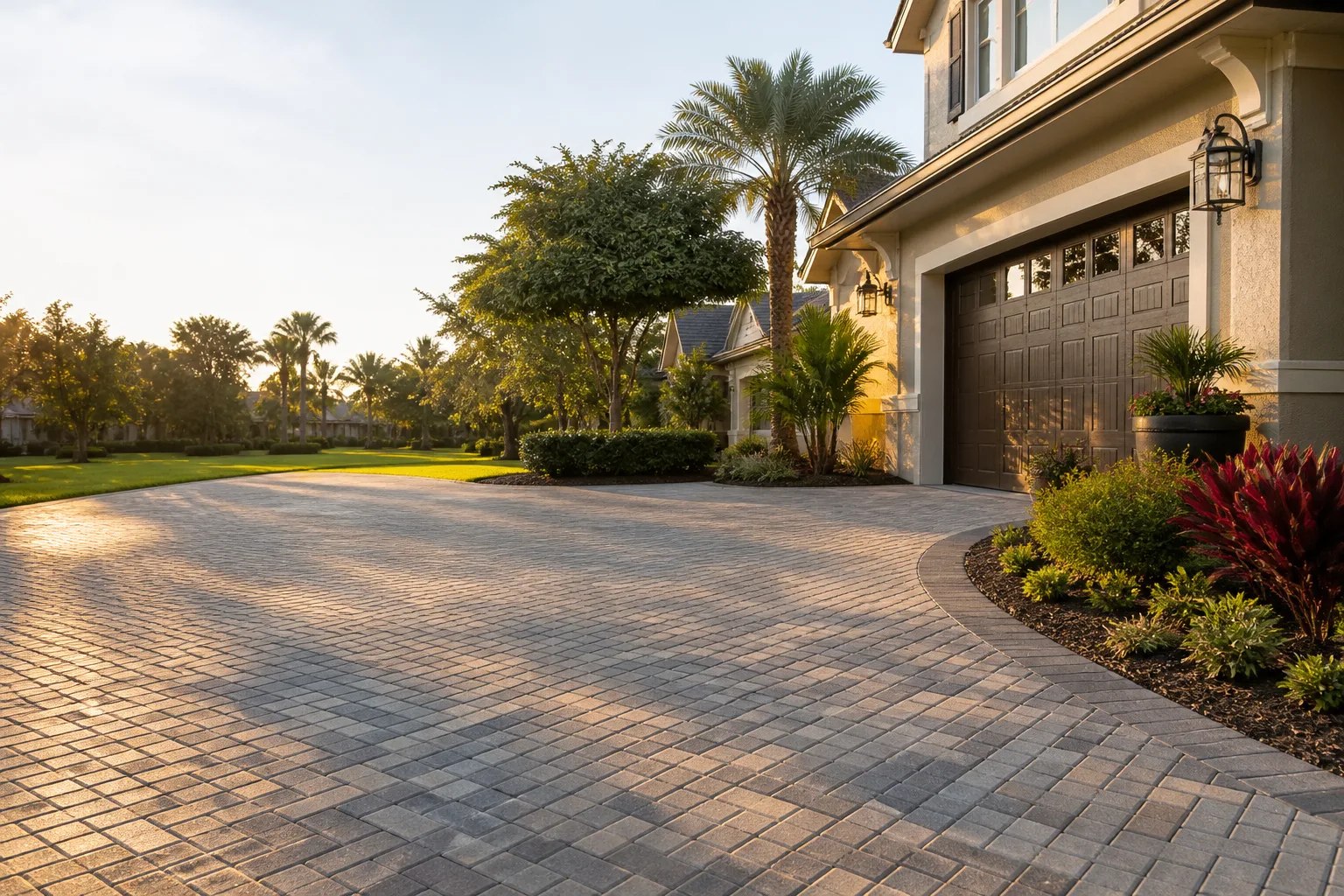
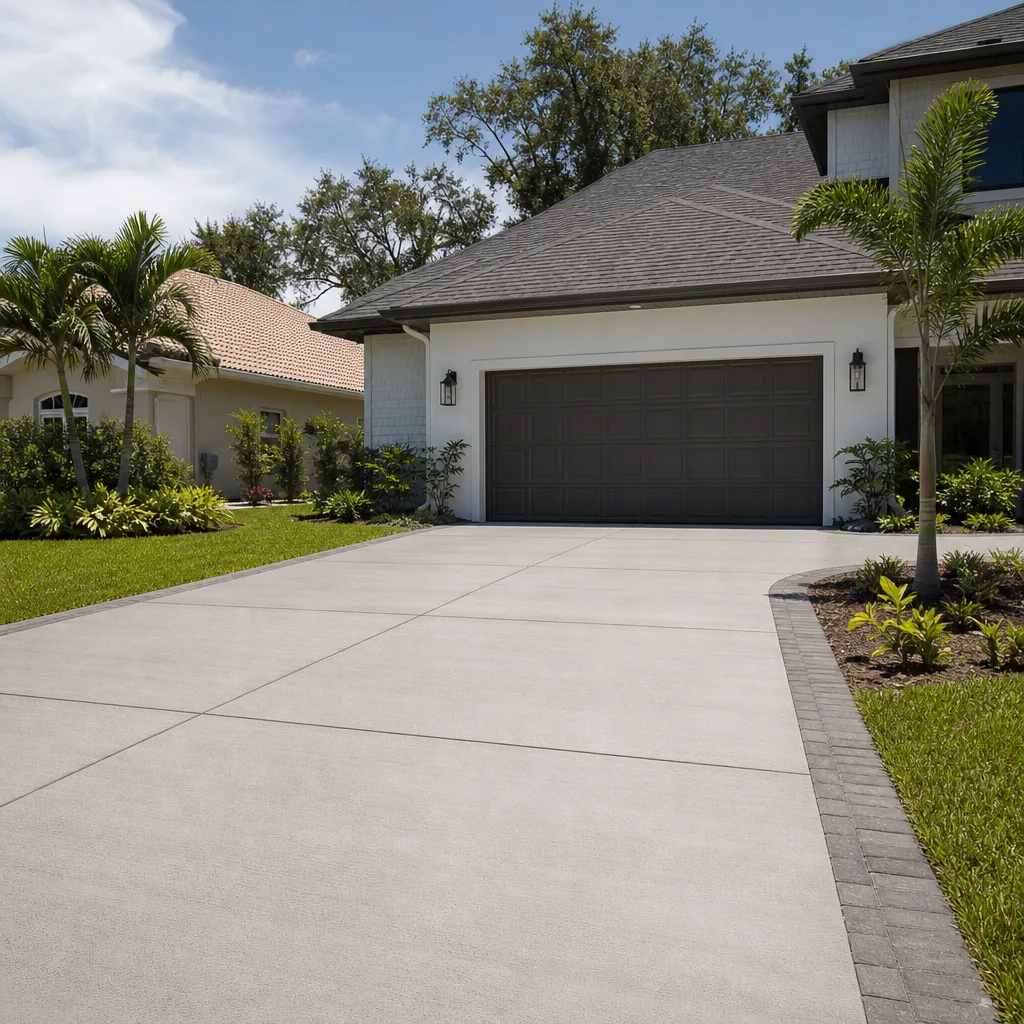
See the difference
 Before
 After
 Before
 After
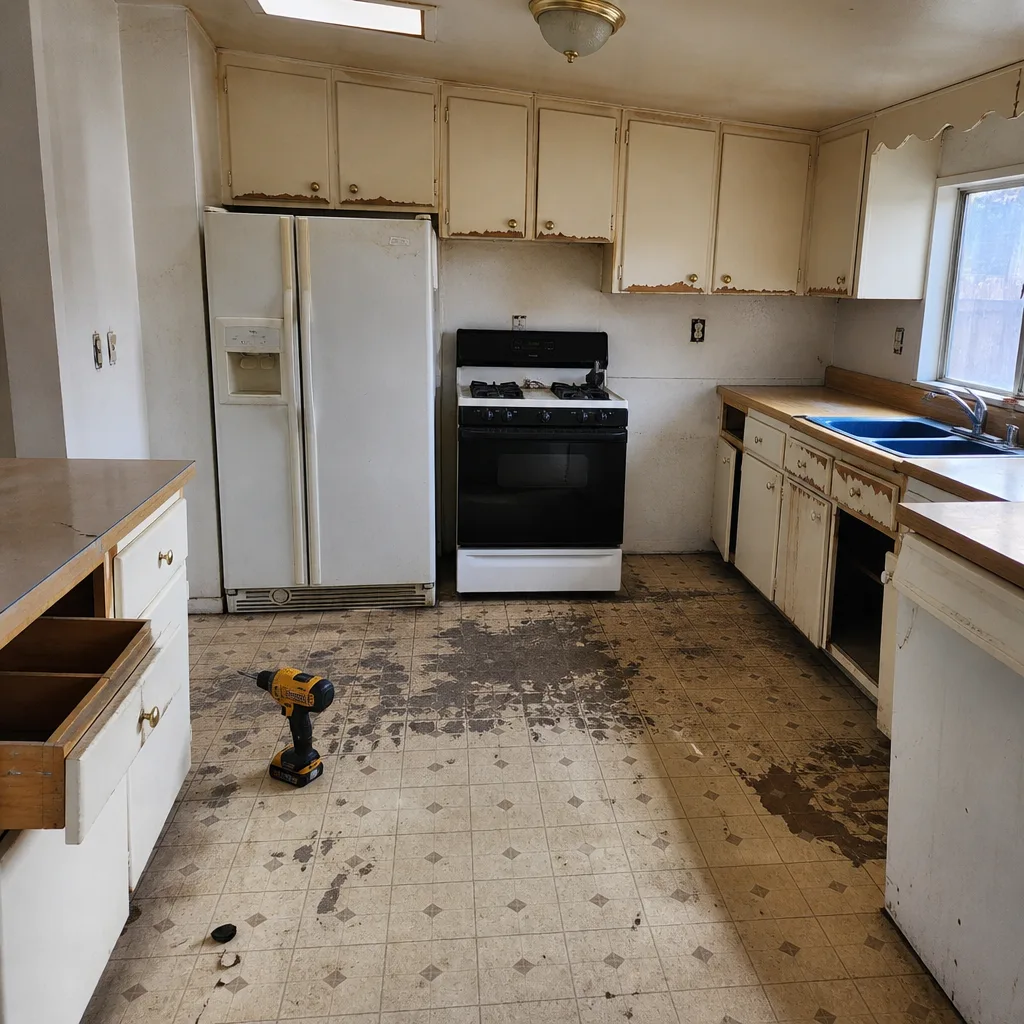 Before
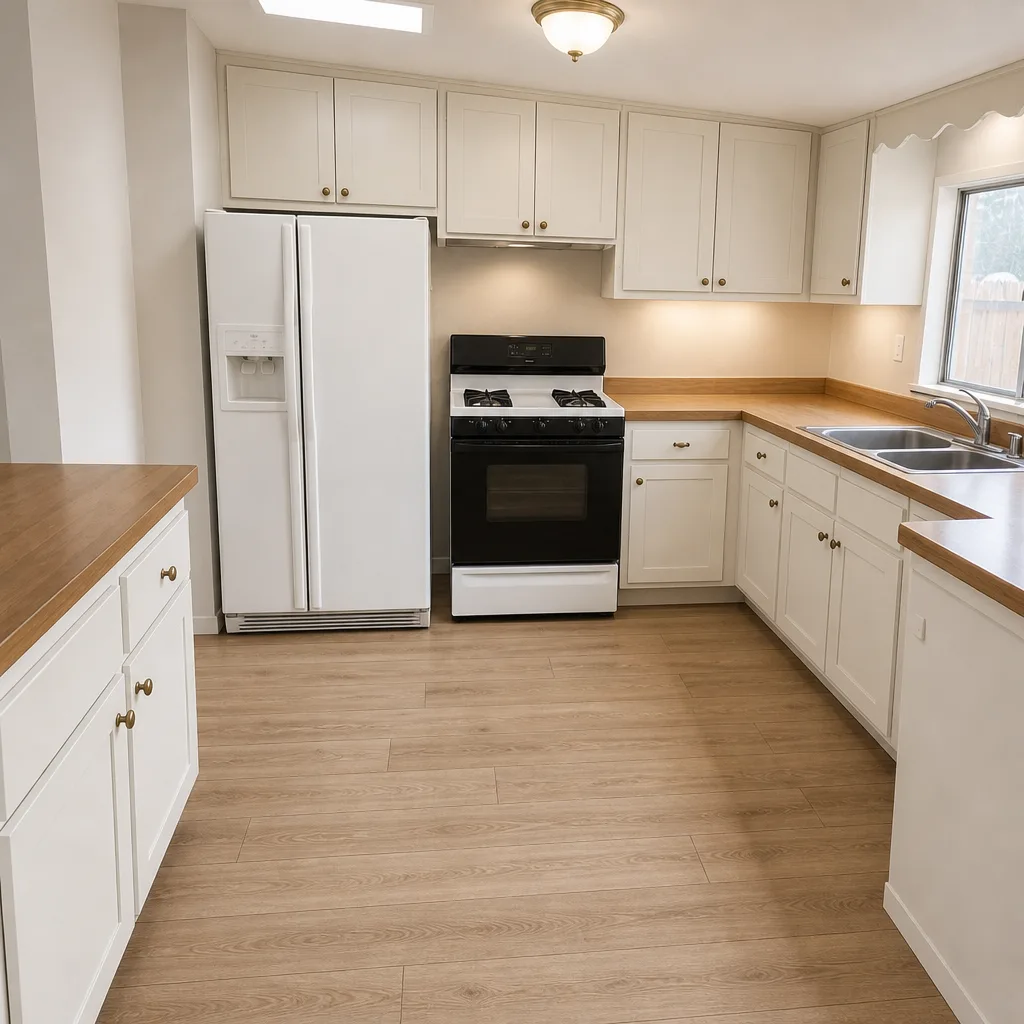 After
Frequently Asked Questions
Every 2 to 3 years, not the 4 to 5 years most manufacturer guidelines suggest, because the UV intensity in Enterprise degrades polymeric joint sand faster than in cooler climates. Inspect the joints annually and re-sand when you see voids or the sand looks dried out and pale. Call (844) 761-9449 for an exact quote on re-sanding – estimates are free.
Yes, but keep the pressure low and use a fan tip. High-pressure washing strips the joint sand out of the pavers and undermines the whole system. Work at a shallow angle and accept that a gentle wash takes longer. If the joints are already depleted, re-sand after washing, not before.
Efflorescence, which is salt migrating to the surface as moisture evaporates. It’s a moisture pathway issue more than a cleaning issue, and it’s more common in Enterprise because local soil and water tend to be alkaline. A proper efflorescence cleaner removes it, but you also want to understand why moisture is moving through the pavers. Call (844) 761-9449 if it keeps coming back after cleaning.
Before. Late spring, usually May or June, gives the sealer a full cure window before the summer UV peak and gets it in place ahead of the monsoon rain. Sealing during monsoon season risks moisture getting trapped below the coating, which causes film-formers to fail and penetrating sealers to underperform.
That’s the highest-traffic zone on the driveway, so it sees the most load and the most thermal movement. The sandstone bedding underneath compresses over time, and once a small void forms, the pavers move and the void grows. It’s fixable with a targeted lift and re-compaction, but it gets bigger the longer it’s ignored. Call (844) 761-9449 for a free estimate on re-compaction before the affected area spreads.
Most cities require a permit for full driveway replacement, so check with the Enterprise building department before work starts. Repairs that don’t alter the footprint or the drainage usually don’t need one, but confirming that before you commit to a scope is the smart move. We can walk through the permit question with you during the estimate process – call (844) 761-9449.
The Bottom Line
Paver maintenance in Enterprise looks different from the advice written for wetter climates, and that difference is the whole game. Re-sand with polymeric joint sand every 2 to 3 years, not 4 or 5. Check edge restraints and drainage channels every spring before monsoon season, not after. Learn to tell the difference between efflorescence, oil staining, and UV bleaching because each needs a different fix. Choose a sealer that’s rated for high UV and apply it before the heat peaks. And re-compact settled sections every few years, even when the driveway looks fine, because that’s the step that prevents small problems from becoming full replacement jobs. If you’re adding a driveway, replacing pavers, or looking at a full property upgrade that touches more than the driveway, Enterprise Construction Co handles the entire scope under one contractor relationship – from the Enterprise Construction Co side of the project through to a home additions & ADU build if that’s where the plan is heading.
Call (844) 761-9449 for a free estimate on your paver driveway. We answer 24/7. Fast dispatch from 7am to 7pm, Sunday through Friday.
Written by the team at Enterprise Construction Co.