
Abodu Driveway & Pavers in Enterprise: A Homeowner’s Guide
Most Abodu buyers in Enterprise spend months choosing the unit and almost no time thinking about the ground it sits on. Then the site work starts. The driveway has to handle a delivery truck, the pathways have to connect to the main house, and every square foot of new hardscape counts against Clark County’s impervious surface rules. This guide covers the layer Abodu’s own materials skip: the driveway, pathways, and grading that decide whether the ADU looks built-in or bolted on.
What does Clark County require for an Abodu driveway and site access in Enterprise?
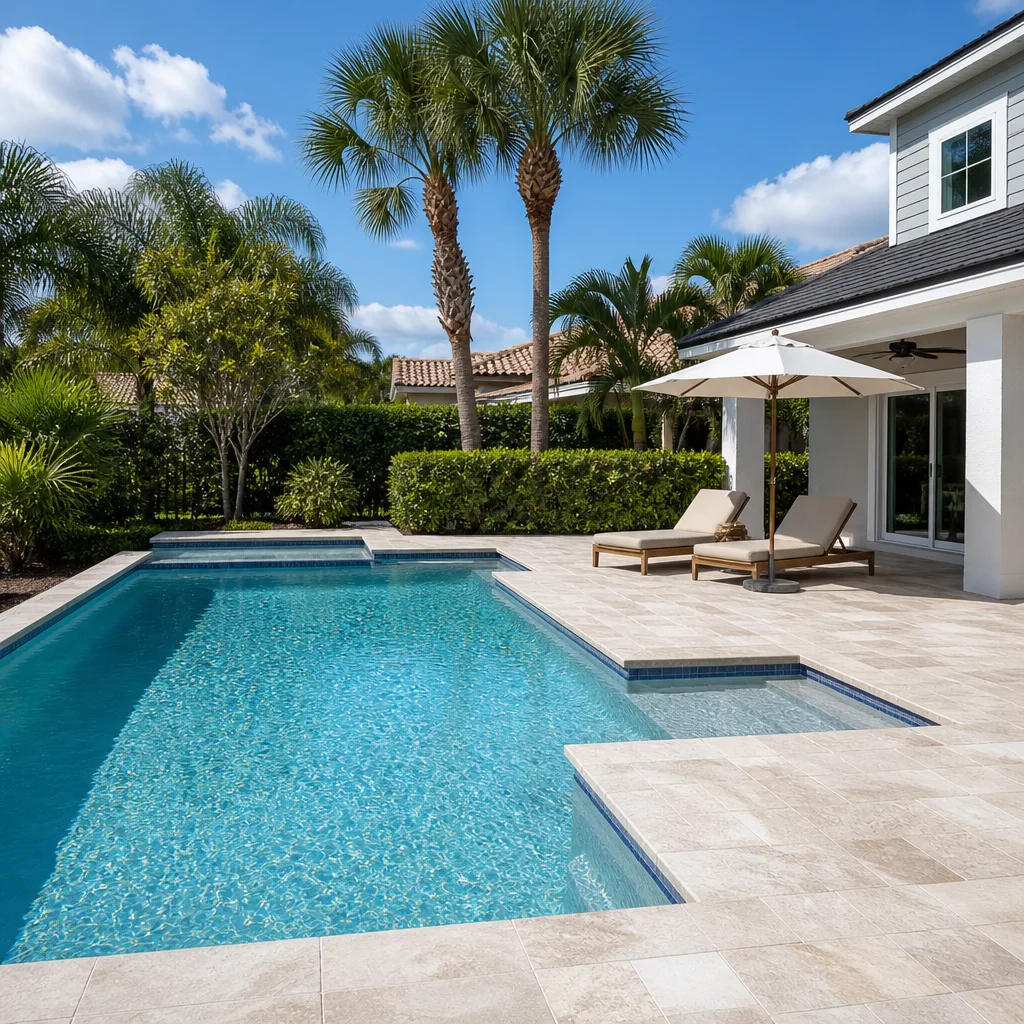
Clark County governs driveway access, setbacks, and how much of your lot can be covered by impervious surface, and those three rules together shape almost every ADU driveway plan in Enterprise. A detached Abodu unit needs a legal path from the street to the unit for residents, deliveries, and emergency access. The county also caps how much of your lot can be hard surface, which is where paver choice starts to matter.
Here’s what that means in practice for an Enterprise property:
- Access width and turning: the drive has to be wide enough to bring a vehicle to the unit, not just to the main garage. Narrow side yards often can’t do it, and that reshapes where the Abodu lands on the lot.
- Impervious surface ratio: concrete, asphalt, and standard pavers all count as impervious unless they’re designed to drain through. Paver systems installed over an open-graded base with proper joint spacing can be counted differently in some designs because water passes through rather than running off. That’s a real lever when you’re already close to the coverage limit.
- Setbacks and drainage direction: runoff has to move away from the ADU foundation and away from the neighbor’s property line. A driveway that pitches the wrong way turns a $200 drainage fix into a foundation problem.
We’re careful not to quote county code from memory. Before any hardscape is laid, your contractor should pull the current requirements for your parcel and confirm the impervious surface math with the county. If your Abodu site plan was drawn before the driveway was designed, it’s worth having both looked at together.
Why the driveway for an Abodu unit needs delivery-truck engineering
An Abodu unit arrives on a truck. Depending on the model and site, that can mean a flatbed, a crane, or both, and those loads are far heavier and more concentrated than a passenger car will ever put on a driveway. A standard residential paver base built for cars will not hold up under that traffic, and the failure shows up as rutting, settling, and pavers that start to rock within the first year.
What that actually requires, in general terms:
- Deeper compacted base. Delivery loads call for a thicker compacted aggregate base than a car-only driveway, placed and compacted in lifts rather than dumped in one pass.
- Proper edge restraint. The pavers have to be locked at the edges or the whole field spreads under load. This is the step that gets skipped most often and causes the most callbacks.
- Joint sand and compaction done right. The pavers get vibratory compaction after setting, then joint sand fills the gaps. Skip this and the surface loosens.
- Drainage slope built into the base. The slope lives in the base, not the pavers. Get it wrong and water pools at the ADU door.
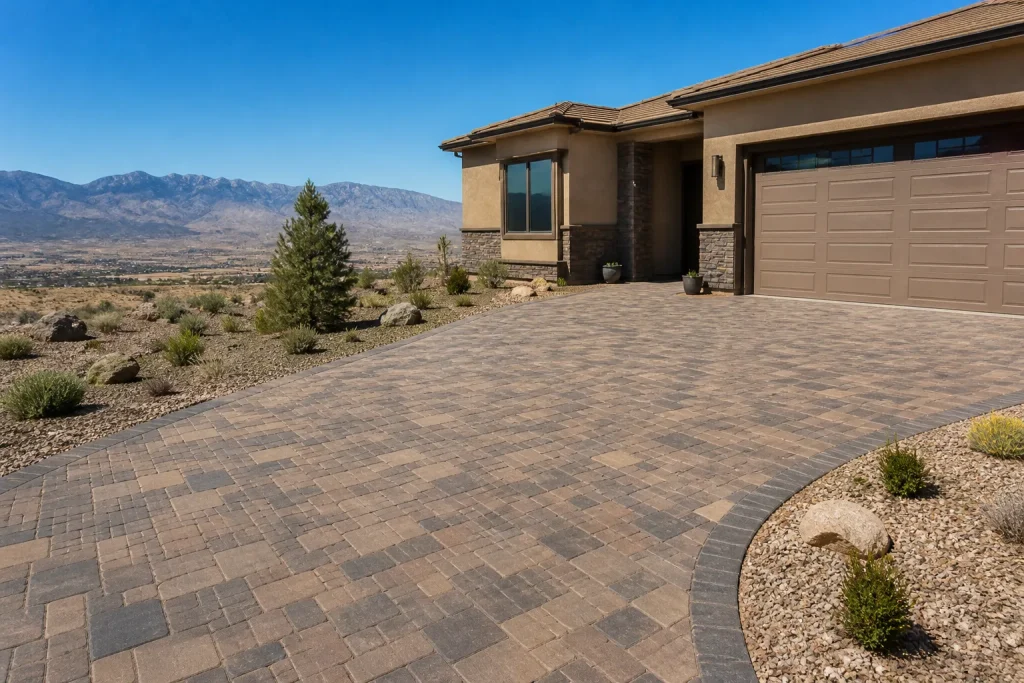
For the driveway surface itself, we specify Belgard, Unilock, or Techo-Bloc because those systems come with documented base and installation standards. When a manufacturer publishes a spec for load-bearing installations, the crew has something concrete to build to and you have something concrete to hold them to. That matters on an Enterprise driveway where a truck is going to roll across it before the unit is even set.
Matching the new ADU hardscape to your existing home
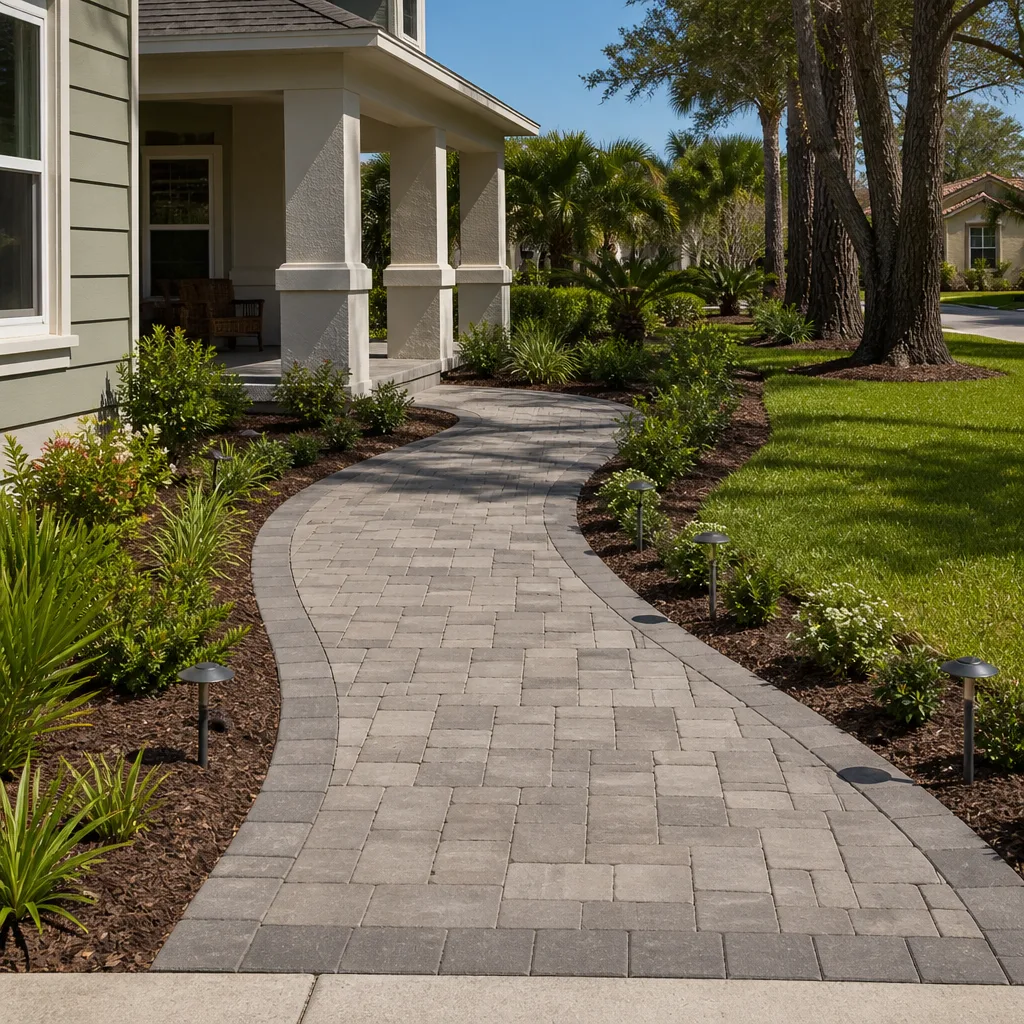
The ADU driveway and pathway are the first thing anyone sees, and they either tie the property together or make the unit look like a prefab box dropped in the backyard. The design coordination step is where that gets decided, and it’s the step homeowners most often skip when they manage the Abodu install and the pavers as two separate projects.
A few approaches that work well in Enterprise:
- Same paver, same color, same pattern from the main driveway through to the ADU. Cleanest result and the easiest to get right.
- Complementary paver (a darker tone or a different texture) used as a border or pathway accent, with the primary field matching the main house. This reads as intentional rather than mismatched.
- Paver banding or a defined path from the main house to the ADU door. It signals the unit is part of the property, not an accessory tacked on later.
One detail worth planning early: if the pathway connects to a covered patio or outdoor kitchen, the pavers should tie to whatever fixtures are already there, including any Kohler or Moen outdoor fittings on the main house. We’ve seen new hardscape cut into a finished patio and leave a visible seam because nobody coordinated the two trades. Planning the transition from the start costs nothing. Fixing it costs a demo and re-lay.
Utility trench routing: do this before the pavers, not after
Every ADU needs its own utility connections, and in Enterprise that usually means trenching for electrical, water, and sometimes sewer or gas between the main house and the unit. That trench has to cross or run alongside the new driveway. If the pavers go down first, every trench line becomes a cut through finished hardscape and a repaving job on top of the original cost.
The sequencing that works:
- Finalize the ADU placement and utility plan against the driveway layout.
- Excavate for the driveway base and the trenches together so the two are coordinated.
- Run the utilities in the trenches and get them inspected.
- Backfill and compact the trenches to the same spec as the surrounding base. This is the step where shortcuts show up later as a sunken strip across the drive.
- Install the paver base, pavers, edge restraint, and joint sand over the whole completed footprint.
Get this order right and the driveway is a single continuous surface. Get it wrong and you’re looking at a patched driveway and a second contractor invoice. On a property where the trench routing is still open, we’d rather plan the pavers around it than after it.
One contractor vs. two on an Abodu site prep
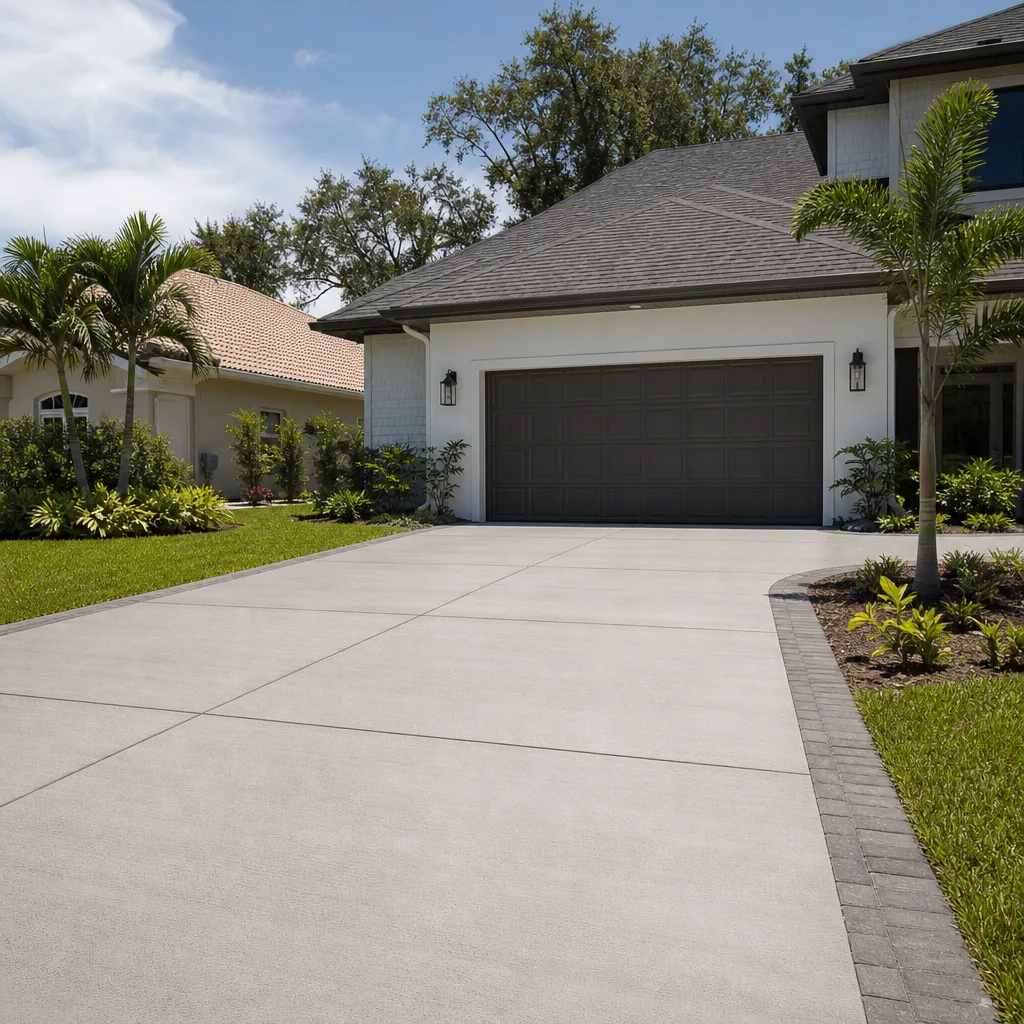
Running the Abodu install and the driveway work as two separate contracts means two schedules, two sets of site access rules, and two chances for something to slip. The unit crew needs a firm, accessible surface to bring the unit in. The paver crew needs the site left at a specific grade. When those two are on different timelines, they can fight each other.
With a single contractor coordinating both, the ordering is decided up front: site grading and trenching, then the paver base, then the unit delivery, then the finished paver surface and pathways. The delivery truck rolls onto a compacted base, the finished pavers go down once, and the unit and the hardscape are finished at the same time. That’s how site work stays tied to the certificate of occupancy timeline rather than pushing past it.
Our technicians have up to 10 years of experience across hardscape and site work, and on projects that combine multiple trades, having Enterprise Construction Co on both sides of the handoff usually saves the homeowner a schedule argument. We’ve coordinated enough prefab ADU installs alongside hardscape to know where the friction points land. Whether you’re adding square footage or updating a single room, the value of a single point of contact is the same: fewer people to chase.
When to call a pro
If your Abodu site plan hasn’t been tied to a driveway design yet, if you’re near the impervious surface limit for your lot, or if utility routing is still open, those are the moments where a bad assumption costs the most. That’s the point to bring in a contractor who does both the hardscape and the site prep under one roof. You can read more about what our driveway & pavers work covers, and if the project also needs a fence installation to define the ADU yard or additional home additions & ADU planning, we handle those on the same contract.
The Bottom Line
The Abodu unit is the visible half of the project. The driveway, pathway, and utility trench routing are the half that decides whether the property feels finished and whether the certificate of occupancy comes on time. Plan the site work and the unit together, engineer the drive for the delivery truck, coordinate the paver choice with the main house, and trench before you pave, not after. If you’re in Enterprise and need help, Enterprise Construction Co offers free estimates – call (844) 761-9449. We answer 24/7. Fast dispatch from 7am to 7pm, Sunday through Friday, and we’re closed Saturday.
Frequently Asked Questions
In most cases yes, because new driveway access and impervious surface coverage are regulated by Clark County and the requirements depend on your specific lot. A contractor should confirm the current rules for your parcel before any base is excavated. Call (844) 761-9449 for a free estimate and we’ll walk through what your property needs.
Sometimes, but only if the existing base is sound and the height change at the edges and door thresholds still works. On a property adding an Abodu, the existing drive usually wasn’t built for delivery-truck loads, so an overlay often doesn’t solve the actual problem. A contractor can tell you which way makes sense. Call (844) 761-9449 to get a written estimate.
No. We quote a fixed price per job in the written estimate, and the estimate sets the final number. If something unexpected comes up in excavation or trench backfill, we’ll talk to you before we do anything different. Call (844) 761-9449 and we’ll put the quote in writing.
It depends on the size of the drive, how many utility lines cross it, and whether the existing surface has to be removed first. The unit itself installs fast; the site work around it is what usually takes longer. One schedule on one contract keeps the two in step. Call (844) 761-9449 for a free estimate on your Enterprise property.
Written by the team at Enterprise Construction Co.
Need Construction Help?
Call Enterprise Construction Co - licensed & insured, here with fast help in Enterprise.
(844) 761-9449